Institute for Wild Futures

    Knowledge exists. Action does not always follow.

    The Institute for Wild Futures (IWF) is a public-interest think tank working at the intersection of technology, ecology, and governance.

    IWF produces knowledge by cultivating relationships between disciplines, institutions, territories, technologies, and life systems. We believe knowledge fulfills its purpose when it has landed where it is needed.

    We shorten the distance between knowledge and action by translating research, data, lived experience, and territorial practice into decision tools, adoption pathways, public-facing resources, and territorial pilots.

    Knowledge exists. Circulation fails. IWF bridges.

    Who we are

    An institute built for the gap between knowing and acting.

    The problem is not a lack of knowledge. It is a lack of coordination.

    Across climate, ecology, food systems, technology, culture, and governance, evidence already exists. Communities already know. Researchers already study. Institutions already receive reports.

    And still, action often arrives late.

    Research remains hard to access. Policy follows a different pace. Communities facing the consequences are left out of the decisions. Public funding produces knowledge that does not always return to the people and places it concerns.

    IWF is the missing infrastructure that shortens that distance.

    We work in the gap between what is known and what gets done.

    Founding team

    Research + Governance + Systems

    IWF is built by three complementary founders working across research, governance, and systems.

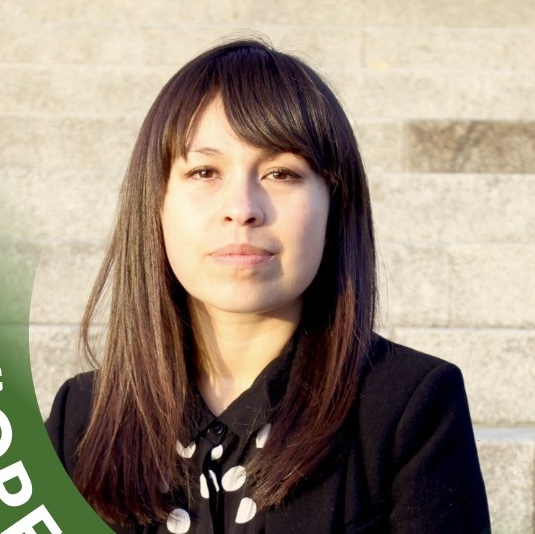
    Portrait of Michelle Lezana

    Michelle Lezana

    Director, Research & Strategy

    Linguist and knowledge translation specialist with 10+ years at the intersection of academia, R&D, public policy, culture, and institutional strategy across Europe and Latin America.

    Raised in Patagonia, Germany-educated — bringing lived experience of peripheral territories and climate impacts. Michelle holds the epistemic and strategic direction of IWF. She defines the Institute's core concepts, research orientation, institutional narrative, and knowledge-to-action frameworks, ensuring that its work remains intellectually coherent, territorially grounded, and institutionally actionable.
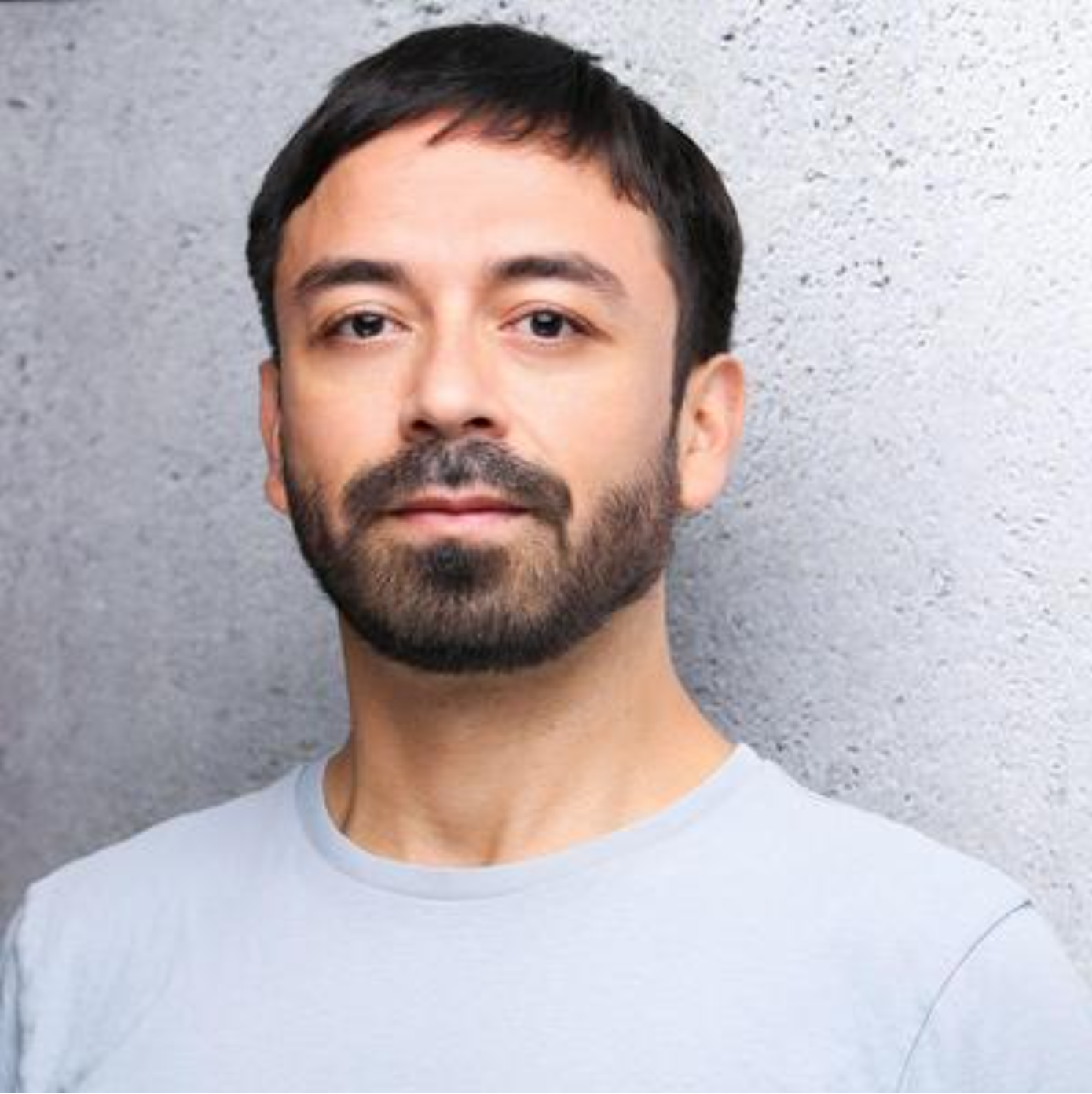
    Portrait of Josué Elgueta

    Josué Elgueta

    Director, Institutional Development

    Law graduate and institutional strategist with 15+ years at the intersection of governance, organizational development, and community-driven processes, building partnerships across Europe and Latin America.

    Originally from Chillán, Chile — shaped by regional inequalities and the social contracts that shape access to opportunity. At IWF, he builds the institute's structural foundations, ensuring our growth is legally sound, financially sustainable, and rooted in resilient partnerships.

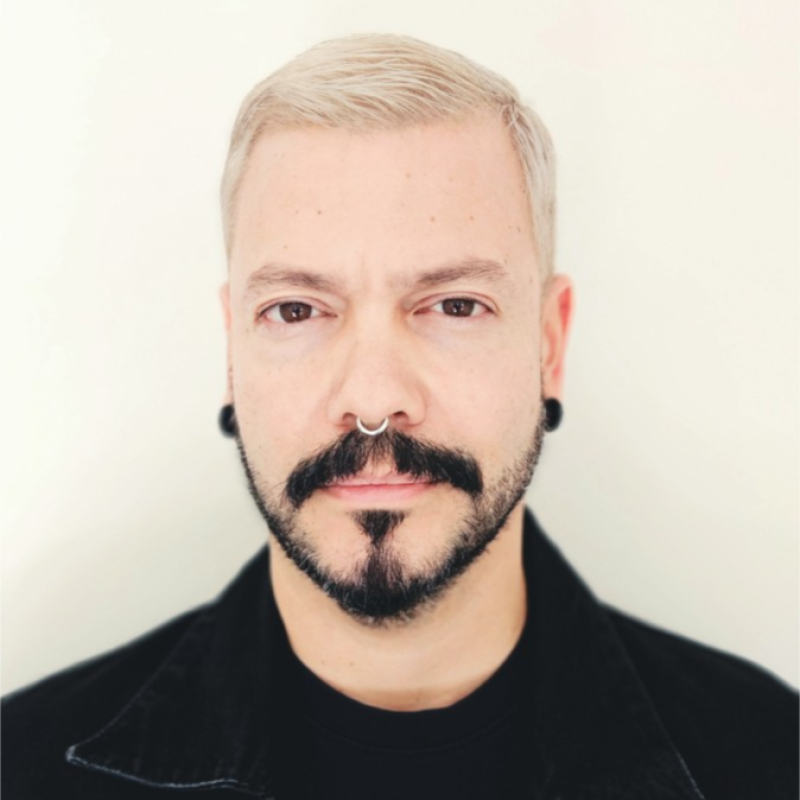
    Portrait of Jesús Martínez

    Jesús Martínez

    Director, Systems & Innovation Translation

    Innovation strategist, founder, and systems thinker with 20+ years at the intersection of technology, culture, and organizational design.

    Raised between Miami and New York City in the diaspora of a Cuban-Honduran family — bringing deep fluency in how communities navigate complexity, adaptation, and informal systems. At IWF, he turns the Institute's knowledge-to-action frameworks into real-world application: building the processes, tools, and collaborations that move knowledge from insight to implementation.

    Research + Governance + Systems = IWF's operating model.

    From knowledge to action

    IWF activates knowledge so it can move.

    We help institutions, researchers, territories, and funders turn complex knowledge into usable forms: decision tools, public-interest outputs, territorial pilots, governance frameworks, and policy-facing resources.

    Our work is not to produce more siloed knowledge. It is to make knowledge land.

    We focus on the missing coordination layer where research, lived experience, institutional timing, public language, and implementation meet.

    That is where knowledge becomes action.

    Four movements, one continuous practice.

    01Map

    We identify the knowledge, decisions, actors, gaps, and tensions shaping a territory or problem.

    02Translate

    We turn research, data, and lived experience into formats people can actually use — in the working languages of communities, institutions, and policymakers.

    03Activate

    We design tools, public resources, governance pathways, and pilots that help knowledge enter decisions, institutions, and public life.

    04Steward

    We keep outputs open, accessible, attributable, and usable beyond the first project.

    What we produce

    • policy briefs and strategic notes;
    • public restitution forums;
    • open-access knowledge resources;
    • decision tools and governance frameworks;
    • visual documentation and narrative outputs;
    • territorial maps and future scenarios;
    • replicable methods and toolkits.

    Our outputs are open by default, translated as needed, and designed for use by communities, practitioners, public institutions, researchers, and policymakers.

    Inside the Wild Futures Lab →

    In motion

    What the Institute is working on right now.

    Pathways, pilots, and public moments where our method is being tested in real territories and institutions.

    IN DEVELOPMENT · PATAGONIA

    Maritorio

    A territorial intelligence pathway for remote maritime territories facing ecological significance and industrial pressure.

    Maritorio brings together territorial mapping, research translation, community futures work and policy-facing tools to test how knowledge can move from evidence into action.

    Explore Maritorio →

    UPCOMING · BERLIN

    IWF at Berlin Science Week 2026

    Michelle Lezana presents “Ancestral algorithms: How did rural women end up weaving eDNA into a tapestry in remote Patagonia?” at Berlin Science Week 2026.

    This talk asks how knowledge returns to a community: through data—or through culture.

    Explore Berlin Science Week 2026

    Manifesto

    We practice wildness as edge, not chaos.

    For IWF, wildness is giving room to ideas that refuse to be fully controlled — and therefore where resilience, creativity, and life emerge.

    Wild is not chaotic. It is undomesticated.

    For the Institute for Wild Futures, wild does not mean chaotic, expressive, or anti-institutional. It refers to a deliberate refusal to fully domesticate knowledge into existing formats, timelines, and narratives.

    The Institute works from within rigorous systems while allowing space for interruption, friction, and forms of intelligence that do not fit neatly into linear, extractive, or solutionist frameworks.

    Many temporalities at once.

    Wildness, for IWF, is the capacity to hold multiple temporalities at once — ancestral, present, and speculative — without collapsing them into a single future narrative.

    It is an attention to material, territorial, and ethical conditions of knowledge, recognizing that ideas emerge from land, bodies, infrastructures, and histories.

    Remote territories are not behind the future.

    They are often reading it first. Places under climate stress, ecological pressure, and industrial transformation reveal what central systems often fail to see in time: broken coordination, delayed policy, inaccessible knowledge, and communities carrying consequences they did not create.

    IWF starts from those places. Not to extract stories. Not to stage participation. But to build the conditions where territorial knowledge can shape research, public understanding, and institutional action.

    Knowledge is public when it can be used.

    At IWF, knowledge is truly public when people can access it, understand it, question it, and act from it.

    Knowledge does not create impact by existing. It creates impact when it is activated.

    Wild is the capacity to hold intelligent friction — where new futures begin to happen.

    Work with us

    IWF works with institutions that want knowledge to move.

    We partner with:

    • universities and research centers;
    • public institutions and local governments;
    • territorial and civil society organizations;
    • museums, cultural institutions, and public knowledge spaces;
    • funders and philanthropic organizations;
    • advisory board members and strategic partners.

    We are especially interested in partnerships that connect research, territory, public value, and funding opportunities.

    IWF can support partners by designing knowledge activation pathways, funding-ready pilots, public-interest outputs, and institutional collaboration models.

    Partner with IWF to:

    • develop funding applications;
    • co-design territorial pilots;
    • activate research for public use;
    • build open knowledge resources;
    • support institutional formation;
    • join advisory and strategic conversations.

    We work with partners who believe knowledge should move, return, and become usable.

    IWF works with institutions and partners ready to shorten the distance between knowledge and action.

    The future is built where knowledge meets territory, research meets governance, urgency meets rigor — and the gap between knowing and acting no longer carries an enormous environmental cost.

    IWF cultivates that gap: tending it into the conditions where what we know becomes what we do.

    Or email us directly at iwf@instituteforwildfutures.com